
Blog
The Law Offices of David B. Hathaway

Filing for bankruptcy can feel overwhelming, but working with bankruptcy attorneys helps you make informed, confident decisions.

Ever had your day interrupted by a call from a debt collector? Debt collectors have a reputation of being rude and even nasty at times. They might say it’s their job to be annoying. After all, they’re just trying to … Continue reading →
The post How can I stop debt collectors from harassing me? appeared first on Rhode Island Bankruptcy Information Center.

About a month after you file a petition for personal bankruptcy in Rhode Island, you must go to the Federal Center in downtown Providence and meet with a bankruptcy trustee. The bankruptcy trustee is not a judge; rather, she or he … Continue reading →
The post Can banks or credit card companies object to my bankruptcy? appeared first on Rhode Island Bankruptcy Information Center.

It’s been estimated that over 60% of bankruptcies are filed due to hospital visits, cancer treatments and other health expenditures. Fortunately, by filing for bankruptcy in Rhode Island, you can usually eliminate debt owed to: hospitals & medical clinics laboratories & … Continue reading →
The post Do medical bills go away in a RI Bankruptcy filing? appeared first on Rhode Island Bankruptcy Information Center.
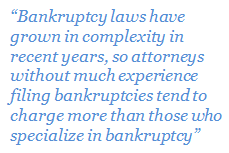
Recently I met a young woman – a recent immigrant to this country – who had met with another attorney before meeting with me. Her case was relatively simple, so I was surprised to learn her first attorney had proposed a fee of $5,000. … Continue reading →
The post How much does it cost to file bankruptcy in RI? appeared first on Rhode Island Bankruptcy Information Center.

Oftentimes not. In Rhode Island you can include your husband (or wife) in a bankruptcy filing at no extra charge from the court. The court filing fee is the same as if you were filing bankruptcy alone. And as for … Continue reading →
The post Does it cost more to file bankruptcy with my spouse? appeared first on Rhode Island Bankruptcy Information Center.

If you owe federal or state income taxes from past years, you may be able to get rid of them by filing a RI bankruptcy. Generally speaking, you must wait three (3) years from the date the IRS / RI Division of … Continue reading →
The post Do income taxes get eliminated by filing for bankruptcy in Rhode Island? appeared first on Rhode Island Bankruptcy Information Center.
When you file bankruptcy in Rhode Island, you should list everyone you owe money to. If you fail to list a creditor, you risk not getting off the hook for that particular debt. How can you avoid leaving a creditor … Continue reading →
The post How can I make sure all my debts get eliminated when I file for bankruptcy? appeared first on Rhode Island Bankruptcy Information Center.

Generally speaking, yes — Rhode Islanders who are unemployed can file for bankruptcy, even if they’re still getting unemployment payments. Of course, you’ll want to make sure that you’re eligible to file a wipe-it-all-clean Chapter 7 bankruptcy (versus a Chapter … Continue reading →
The post Can I file bankruptcy when I’m receiving unemployment? appeared first on Rhode Island Bankruptcy Information Center.

Most people do NOT need to appear before a judge in order to complete their bankruptcy in Rhode Island. But they do need to attend a Section 341 Meeting of Creditors, which is run by a bankruptcy trustee (not a judge) who has … Continue reading →
The post Do I need to go to court if I file bankruptcy? appeared first on Rhode Island Bankruptcy Information Center.
Share On: